
The World’s First "Smart Home": Why Was a 400-Kilogram Computer’s Main Job to Give an Apple Pie Recipe?
- 0
- 20-08-2026
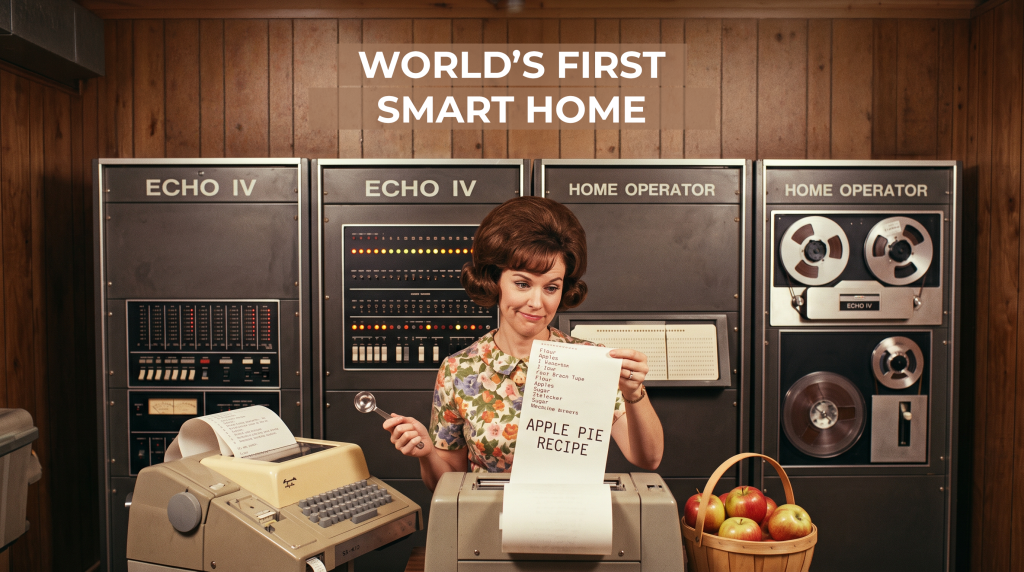
Imagine this: instead of tapping a smartphone to control the lights in your home, you have to head down to the basement and enter complex codes into a 400-kilogram system made of four giant metal cabinets. While this scene sounds straight out of a retro sci-fi movie, it was actually the reality of humanity's very first "smart home" system!
Back in 1966, Jim Sutherland, an engineer at Westinghouse Electric, embarked on an incredible experiment right inside his own home. He created a device named ECHO IV (Electronic Computing Home Operator), which famously went down in history as the father of home automation.
By the standards of that era, this futuristic system could perform several remarkable tasks:
-Regulating indoor temperature and home climate;
-Automatically controlling the lighting system;
-Turning household appliances on and off on schedule;
-Calculating the family budget and financial expenses.
However, in true tech-history fashion, an unexpected irony unfolded. Even though Jim designed this massive computer for engineering and advanced household management, his wife, Ruth Sutherland, quickly turned the device into her ultimate digital assistant for everyday chores.
In those days, monitors and digital screens did not exist yet. If Ruth wanted to bake a famous apple pie for dinner or simply put together a grocery list, she had to type special codes into a keyboard and then wait for the information to print out on a noisy teletype printer. Just like that, a million-dollar technological marvel of its time essentially became the world's most expensive and loudest recipe book!
The ECHO IV project was far too expensive and complex for mass production back then—it was never commercialized and lived out its days solely in the Sutherland family's basement. Yet, it laid the foundational stone for the future.
Today, we can turn off lights with simple voice commands or have our refrigerators automatically order groceries when supplies run low. But this endless digital convenience in our kitchens traces its roots straight back to 1966—to that legendary chunk of metal that consumed tons of electricity just to spit out a potato-and-onion shopping list. History proves once again that behind every great technological revolution lies a simple human desire to make daily life just a little bit easier.